
Experiencing headaches after a car accident can be unsettling. You might wonder if you should be concerned or if it’s just a minor inconvenience. Headaches are common after vehicle collisions. However, their causes, severity, and recovery process vary significantly. Understanding why they happen and when to seek help can speed your recovery and prevent complications.
Post-accident headaches can range from mild tension-type pain to severe migraines. They might start right after the crash or develop days later. Some headaches fade quickly, while others persist and may signal underlying injuries. Knowing the difference between a normal headache and one needing medical attention is key to protecting your health.
This article explores the types of headaches that can occur after a crash. We’ll cover their causes, warning signs, and effective management strategies. Let’s dive into what causes these headaches, warning signs to watch for, and steps you can take to feel better.
Common Causes of Post-Traumatic Headaches
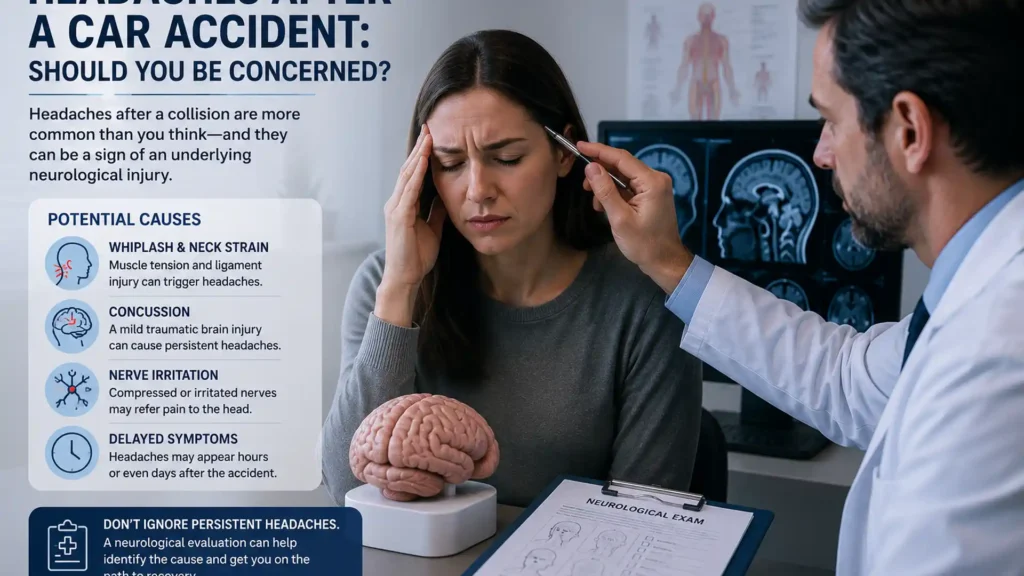
A post-traumatic headache develops after physical trauma, such as a car crash. These headaches often stem from injuries to the head, neck, or brain. Two common culprits are neck injuries and concussions. Both can trigger headaches that may signal deeper problems:
- Neck Injury (Whiplash). A sudden jolt in a car crash can strain or damage muscles, ligaments, or nerves in your neck. This trauma can cause pain that radiates to your head, leading to tension-type headaches. These often feel like a tight band around your head or aching at the base of your skull. Neck injuries may also cause stiffness. This makes it hard to move your head comfortably.
- Concussion. A concussion happens when your brain gets jostled inside your skull during impact. This can lead to headaches that feel throbbing or pounding. They’re sometimes accompanied by dizziness, nausea, or sensitivity to light and sound. Concussion-related headaches may not show up immediately. That’s why monitoring symptoms after an accident is so important.
Other factors like stress or dehydration can also contribute to headaches after a crash. However, neck injuries and concussions are the most common physical causes. Identifying the source of your headache can guide you toward the right treatment. It can also help prevent long-term issues.
When Headaches Signal Serious Problems
Not all headaches are harmless. Some can point to serious conditions that need immediate medical care. Knowing these warning signs can help you decide when to seek help. Here are red flags to watch for:
- Severe or worsening pain. If your headache gets worse over time or feels more intense than any you’ve had before, it could signal a problem like brain injury.
- Neurological symptoms. Confusion, memory loss, difficulty speaking, or trouble concentrating may suggest a concussion. They could also indicate something more serious, like brain bleeding.
- Vision changes. Blurred vision, double vision, or seeing flashes of light can all indicate problems with your brain or eyes after the accident.
- Nausea or vomiting. Persistent nausea or vomiting, especially with headaches, could point to a concussion or increased brain pressure.
- Weakness or numbness. If you feel weakness in your arms or legs or numbness anywhere in your body, get medical attention right away.
If you notice any of these symptoms, don’t wait to seek help. They could indicate serious complications like traumatic brain injury (TBI) or internal bleeding. These conditions require urgent medical attention. Even if your headache seems mild but lasts more than a few days, it’s worth getting evaluated. This can help rule out hidden injuries.
Managing Post-Accident Headaches
Managing headaches after a car accident involves combining home care with professional treatment. The approach depends on the severity. Here are practical ways to find relief:
- Rest and relaxation. Give your body time to heal by resting in a quiet, dark room. Stress and overstimulation can make headaches worse. Try to relax as much as possible.
- Stay hydrated and eat well. Drink plenty of water and eat balanced meals. Dehydration and low blood sugar can worsen headaches. This is especially true after the stress of an accident.
- Over-the-counter pain relief. Medications like ibuprofen or acetaminophen can help with mild headaches. Follow dosage instructions and avoid overuse. Overusing these medications can lead to rebound headaches.
- Cold or warm compresses. Apply a cold pack to your forehead or a warm compress to your neck. This can ease muscle tension and reduce pain.
- Gentle stretching. If your headache stems from a neck injury, light stretches may help loosen tight muscles. Make sure a doctor approves these stretches first.
For more severe or persistent headaches, medical treatments may be necessary. A doctor might recommend:
- Physical therapy. This addresses neck injuries and improves mobility, reducing headache frequency.
- Prescription medications. For migraines or severe pain, doctors may prescribe stronger medications to manage symptoms.
- Imaging tests. X-rays, CT scans, or MRIs can check for underlying issues like concussions or fractures.
Always consult a healthcare provider before starting any treatment. This is especially important if you suspect a concussion or neck injury. They can create a treatment plan tailored to your specific needs.
When to Seek Medical Attention
Knowing when to see a doctor is crucial for your recovery. Some headaches resolve on their own. However, certain situations require professional evaluation. Seek medical attention when:
- Your headache lasts more than a few days or keeps coming back
- You experience symptoms like dizziness, confusion, or vomiting
- Pain disrupts your ability to sleep, work, or perform daily activities
- You have a history of concussions or head injuries (this increases your risk of complications)
- You notice changes in vision, balance, or coordination
A doctor can determine whether your headache relates to a minor issue or something more serious. This includes conditions like concussions or neck injuries. They may order tests to check for brain or spinal damage. They can also recommend treatments to prevent long-term problems. Don’t ignore persistent or unusual symptoms. Early intervention can make a significant difference.
Preventing Chronic Headaches
Some people develop chronic headaches after a car crash. This means they occur frequently or last for months. Taking steps to prevent this can significantly improve your quality of life. Here are tips to reduce the risk of chronic headaches:
- Follow medical advice. Stick to your doctor’s recommendations. This includes rest, physical therapy, or medications. Completing treatment plans can prevent lingering problems.
- Manage stress. Accidents can be traumatic, and stress can trigger headaches. Try relaxation techniques like deep breathing, meditation, or yoga. These help keep your body calm.
- Maintain good posture. Poor posture can strain muscles and lead to headaches. This is especially true after a neck injury. Be mindful of how you sit, stand, and use devices.
- Stay active. Gentle exercise like walking or stretching can improve circulation and reduce tension. Avoid high-impact activities until a doctor clears you.
- Get enough sleep. Poor sleep can worsen headaches. Aim for 7-8 hours of quality sleep each night. Try to maintain a consistent sleep schedule.
- Limit screen time. Staring at phones or computers for long periods can strain your eyes and neck. This can trigger headaches. Take regular breaks and adjust screen brightness.
If headaches persist despite these efforts, consider working with a specialist. Chronic headaches may require ongoing medical care to manage effectively.
The Role of Neurologists in Treatment
For complex or persistent headaches, a neurologist can play a key role in your recovery. These specialists focus on the brain and nervous system. This makes them experts in diagnosing and treating post-traumatic headaches. Here’s how they can help:
- Accurate diagnosis. Neurologists can determine whether your headache is caused by a concussion, neck injury, or another condition. They may use advanced tests like MRIs or EEGs to assess brain activity.
- Personalized treatment plans. They can prescribe medications, recommend therapies, or suggest lifestyle changes. These are tailored to your specific condition.
- Monitor recovery. If you have a concussion, a neurologist can track your progress. They ensure your brain is healing properly.
- Prevent complications. They can identify early signs of serious issues like post-concussion syndrome. Then they take steps to address them.
Working with a neurologist is especially helpful if your headaches don’t improve with basic treatments. It’s also beneficial if you have symptoms like memory problems or dizziness. They can coordinate with other specialists, such as physical therapists, to create a comprehensive treatment plan.
Headaches after a car crash are common, but they shouldn’t be ignored. Whether caused by neck injuries, concussions, or stress, they can range from mild to severe. By recognizing warning signs and seeking timely medical attention, you can manage your symptoms effectively. Following preventive measures also helps reduce the risk of long-term complications.
If your headaches persist or worsen, a neurologist can provide expert care to guide your recovery. Stay proactive about your health. Don’t hesitate to contact a doctor if something feels wrong. Your well-being is worth the effort.
Car accidents, even minor ones, can have a lasting impact on your body and mind. The sudden jolt of a crash can affect your brain and nervous system in ways that aren’t always obvious right away. Common neurological symptoms like concussion, whiplash, numbness, dizziness, headaches, memory loss, and balance issues can show up hours, days, or even weeks after the incident. These symptoms can range from mild annoyances to serious issues that need prompt attention.
The moments after a car accident can be chaotic, and adrenaline often masks pain or discomfort. You might walk away thinking you’re fine, only to notice symptoms later when the shock wears off. Neurological symptoms are especially tricky because they don’t always show up as visible injuries. For example, you might feel foggy, struggle to focus, or have trouble keeping your balance. These could point to something more serious than just “feeling off.” Understanding what to look for and acting quickly can prevent small issues from becoming bigger problems.
Our clinic understands how overwhelming it can be to navigate these challenges. We’re here to help you recognize the symptoms, seek the right care, and get back to feeling like yourself. This article will guide you through the key symptoms to watch for, explain why they happen, and offer practical steps for recovery. Whether you’re dealing with a mild headache or more concerning symptoms like memory loss, we’re here to provide resources and support to help you through the healing process.
Early Signs and Risks of Brain Injury
A concussion is one of the most common injuries after a car accident. It happens when your brain gets jostled inside your skull due to a sudden impact. You don’t always need to hit your head to get a concussion. A quick stop or jolt can be enough. Symptoms might include feeling foggy, having trouble focusing, or feeling unusually tired. You might also notice sensitivity to light or noise, nausea, or trouble sleeping.
Other symptoms of a brain injury can include:
- Persistent headaches that don’t go away with rest or over-the-counter medications
- Confusion or feeling “out of it”
- Trouble remembering things that happened before or after the accident
- Mood changes, like feeling irritable or sad for no clear reason
Catching these symptoms early is crucial. A concussion might seem minor, but ignoring it can lead to bigger problems, like prolonged recovery or even permanent damage. If you feel off after an accident, don’t ignore it. Keep track of how you’re feeling and talk to a doctor if symptoms last more than a day or two.
Understanding Whiplash and Nerve Impact
Whiplash happens when your neck gets whipped back and forth, often in rear-end collisions. It’s not just a sore neck. It can affect your nerves and muscles, causing a range of symptoms. You might feel stiffness, pain when moving your head, or even tingling in your arms or hands. In some cases, whiplash can irritate or damage nerves, leading to numbness in your fingers, arms, or shoulders.
This numbness comes from the strain on your neck’s nerves and muscles. The sudden movement can pinch or inflame nerves, causing them to send abnormal signals to your brain. You might also feel:
- A burning or prickling sensation in your limbs
- Weakness in your arms or hands
- Pain that radiates from your neck to other areas
Whiplash doesn’t always show up right away, so pay attention to how your body feels in the days after an accident. Gentle stretching and rest can help mild cases, but if numbness or pain sticks around, it’s time to see a doctor.
Memory Loss and Cognitive Effects After Trauma
Car accidents can affect more than just your body. They can impact how your brain works too. Memory loss is a common issue after a head injury or severe whiplash. You might forget details about the accident, struggle to remember names or tasks, or feel like your thoughts are slower than usual. This can be scary, but it’s often temporary with the right care.
Memory problems can show up in different ways:
- Forgetting conversations or events from the day
- Trouble concentrating on work or daily tasks
- Feeling confused when trying to follow instructions
These issues often tie back to a concussion or other brain injury. The brain needs time and rest to heal, but pushing through without help can make things worse. If you notice memory issues lasting more than a few days, it’s a sign to get professional advice.
When to Consult a Neurologist
If you’re dealing with symptoms like dizziness or balance issues after an accident, it’s a good idea to see a neurologist. Dizziness can make you feel unsteady or like the room is spinning, while balance problems might make walking or standing feel off. These symptoms can point to a concussion, inner ear damage, or nerve issues from whiplash.
A neurologist can run tests to figure out what’s going on. They might check your coordination, reflexes, or memory with simple exercises. In some cases, they’ll recommend imaging tests like an MRI or CT scan to look at your brain or neck. Here’s when you should make an appointment:
- Symptoms like dizziness, numbness, or memory loss last more than a few days
- You have severe headaches that get worse or don’t improve
- You feel unsteady or have trouble walking without tripping
Don’t wait for symptoms to “go away on their own.” A neurologist can help you understand your condition and create a plan to recover. At our clinic, we can connect you with trusted specialists to get you back on track.
Managing and Recovering from Neurological Symptoms
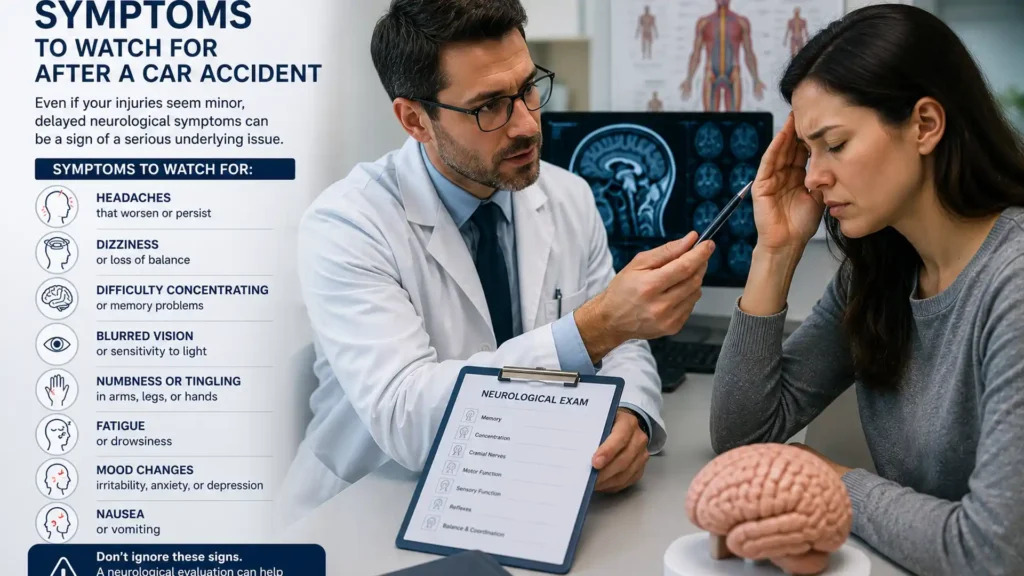
Dealing with neurological symptoms after an accident can feel overwhelming, but there are ways to manage and recover. Treatment depends on the symptoms and their cause, but here are some common approaches:
- Rest and Recovery. For a concussion, rest is key. This means limiting screen time, avoiding loud noises, and giving your brain a break from demanding tasks.
- Physical Therapy. For whiplash or balance issues, a physical therapist can guide you through exercises to strengthen your neck or improve coordination.
- Medication. If you’re struggling with headache pain, a doctor might suggest over-the-counter pain relievers or, in some cases, prescription medications for severe symptoms.
- Cognitive Therapy. If memory loss or concentration problems persist, a therapist can help you rebuild those skills with targeted exercises.
Rehabilitation takes time, so be patient with yourself. Follow your doctor’s advice and avoid rushing back to normal activities too soon. Small steps, like short walks or light stretching, can help you ease back into your routine without overloading your system.
At our clinic, we offer resources and support to help you through recovery. Whether it’s recommending trusted therapists or providing tools to track your symptoms, we’re here to make the process easier.
Preventing Long-Term Neurological Damage
Taking care of yourself after an accident can prevent minor issues from turning into chronic problems. Here are some practical tips to protect your brain and nerves in the long run:
- Follow Medical Advice. Stick to the treatment plan your doctor or neurologist gives you. Skipping appointments or ignoring symptoms can lead to worse outcomes.
- Monitor Symptoms. Keep a journal of how you feel each day. Note any changes in headaches, dizziness, or memory issues to share with your doctor.
- Stay Active Safely. Gentle exercise, like walking or yoga, can improve blood flow and help with recovery. Avoid high-impact activities until you’re cleared by a professional.
- Protect Your Neck and Head. If you’re returning to driving or sports, make sure you’re using proper safety gear, like seatbelts or helmets, to avoid new injuries.
- Manage Stress. Stress can make symptoms like headaches or dizziness worse. Try relaxation techniques like deep breathing or meditation to stay calm.
Long-term damage isn’t always obvious right after an accident. For example, untreated whiplash can lead to chronic neck pain, or an ignored concussion might cause ongoing memory problems. By staying proactive, you can lower the risk of these issues becoming permanent.
At our clinic, we’re committed to helping you stay healthy after an accident. We can provide tools like symptom trackers, connect you with specialists, or offer advice on safe ways to stay active. Your recovery matters, and we’re here to support you every step of the way.In summary, car accidents can lead to neurological symptoms like concussion, whiplash, numbness, dizziness, headaches, memory loss, and balance issues. Recognizing these symptoms early, seeking professional help, and following a recovery plan can make all the difference. With the right care, you can manage symptoms, avoid long-term damage, and get back to feeling like yourself. If you’re dealing with any of these issues, visit our clinic for resources and guidance to support your healing journey.
A car accident, sports injury, or even a simple fall can affect you in more ways than one. While cuts and bruises are easy to spot, injuries to the brain can be trickier to notice. That’s where a neurologist consultation comes in. Neurologists are doctors who specialize in the brain and nervous system. They’re the go-to experts when an accident leaves you feeling off, especially if you suspect a brain injury. Car accidents, whether minor or severe, can sometimes lead to issues like concussions or other brain-related problems that need professional attention.
The brain is a delicate organ, and even a small bump can cause issues that linger if not addressed. A neurologist can evaluate symptoms, run tests, and create a plan to help you heal. Whether it’s a headache that won’t go away or trouble focusing, knowing when to see a specialist can make all the difference.
This article will guide you through when to seek help, what to expect, and how to support your recovery. Let’s break down the signs to watch for, what a neurologist does, and how to move forward after an accident-related brain injury.
Recognizing Serious Head Injury Signs
A head injury can happen in many ways. This includes a car crash, a fall, or a hit during sports. Not every bump on the head requires a trip to the doctor, but some signs require immediate attention. One of the most common issues after an accident is a concussion, a type of brain injury that can disrupt how your brain works. Concussion symptoms vary from person to person but often include:
- Dizziness or trouble balancing
- Feeling confused or foggy
- Nausea or vomiting
- Sensitivity to light or noise
- Trouble concentrating or remembering things
- Feeling unusually tired or sleepy
These symptoms might show up right after the accident or take hours, even days, to appear. For example, you might feel fine right after a crash but wake up the next day with a pounding headache or trouble focusing. Another red flag is a post-traumatic headache. This can feel like a tension headache or migraine and may stick around for days or weeks. If you notice any of these signs, especially if they worsen or don’t go away, it’s time to consider seeing a neurologist. Ignoring these symptoms can lead to longer recovery times or complications, so don’t brush them off.
Other serious signs to watch for include seizures, slurred speech, or changes in mood or behavior. These could point to a more severe brain injury that needs immediate care. If you or someone you know experiences these, don’t wait. Seek medical help right away.
What Happens During a Neurological Exam?
When you visit a neurologist, they’ll likely perform a neurological exam to check how your brain and nervous system are functioning. This exam is a key part of a brain injury assessment and helps the doctor understand what’s going on. It’s not invasive, and you don’t need to feel nervous. It’s a straightforward process designed to spot any issues.
During the exam, the neurologist will:
- Test your reflexes, like tapping your knee to see how it responds
- Check your coordination and balance, such as asking you to walk in a straight line
- Evaluate your memory and thinking by asking simple questions or tasks
- Assess your vision, hearing, and speech
- Look at how your muscles move and respond to touch
During the neurological exam, the neurologist might also ask about your symptoms, medical history, and details about the accident. This helps them piece together whether your symptoms are tied to a concussion or something more serious. In some cases, they may recommend imaging tests like a CT scan or MRI to get a clearer picture of your brain. These tests can rule out bleeding, swelling, or other damage that might not show up in a physical exam.
The goal of the neurological exam is to pinpoint the problem and decide on the next steps. It’s a critical tool for understanding the extent of a brain injury and planning your recovery.
Understanding Post-Traumatic Headache
Post-traumatic headaches are one of the most common issues after a head injury. They can feel like a regular headache, but they’re often more persistent and tied to the trauma from an accident. These headaches can start within a few hours or days of the injury and may last for weeks or even months if not treated properly.
What causes these headaches? When your head takes a hit, the brain can move inside the skull, causing inflammation or irritation. This can lead to pain that feels like:
- A tight band around your head (like a tension headache)
- Throbbing pain on one side (like a migraine)
- Pain that worsens with activity, light, or noise
Other symptoms of head injury often accompany these headaches. These include dizziness, trouble sleeping, or feeling irritable. These headaches can be frustrating because they disrupt daily life. They make it hard to work, focus, or even enjoy time with family. A neurologist can help figure out if your headache is tied to a concussion or another issue and suggest ways to manage the pain. For some, over-the-counter medications work, while others might need specific treatments to ease the discomfort.
Recovery Timeline and Monitoring
Recovery from trauma after a brain injury varies depending on the person and the severity of the injury. For a mild concussion, you might feel better in a week or two with proper rest. More severe injuries, though, could take weeks or even months to fully heal. The key is to give your brain time to recover while keeping an eye on your symptoms.
Here’s a general timeline for concussion recovery:
- First few days. Rest is crucial. Avoid activities that strain your brain, like staring at screens or doing intense physical exercise.
- 1-2 weeks. Symptoms like headaches or dizziness often start to fade. You might slowly return to light activities, like short walks or reading.
- 2-4 weeks. Most people feel back to normal, but some may still have lingering symptoms like mild headaches or trouble focusing.
- Beyond 4 weeks. If symptoms persist, follow up with a neurologist. This could signal a condition like post-concussion syndrome, which needs extra care.
During recovery after your brain injury assessment, check in with your doctor regularly. This is especially important if symptoms don’t improve or get worse. Keep track of how you feel. Note things like headache frequency, sleep patterns, or mood changes. This information helps your neurologist adjust your treatment plan if needed. Avoid rushing back to sports, driving, or work until you’re cleared by a doctor. Pushing too soon can set you back.
Treatment Options Available
Treating a brain injury depends on its severity and symptoms. A neurologist will tailor a plan to your needs, which might include:
- Rest. Giving your brain a break from overstimulation (like screens or loud environments) is often the first step.
- Medications. Over-the-counter pain relievers like ibuprofen can help with headaches. In some cases, doctors may prescribe stronger medications for severe pain or other symptoms.
- Physical therapy. If balance or coordination is affected after head injury, therapy can help retrain your body.
- Cognitive therapy. For trouble with memory or focus, a therapist can teach strategies to improve brain function.
- Lifestyle changes. Getting enough sleep, staying hydrated, and eating well support healing.
For persistent issues like post-traumatic headaches, your neurologist might suggest treatments like nerve blocks or medications to prevent migraines. The goal is to reduce symptoms and help you get back to your routine safely.
Tips for Supporting Brain Health Post-Trauma
Healing from a brain injury involves more than just medical treatment. Your daily habits play a big role too. Here are some practical tips to support your brain health during recovery from trauma:
- Rest and sleep. Aim for 7-9 hours of sleep each night. A consistent sleep schedule helps your brain repair itself.
- Stay hydrated. Drink plenty of water to keep your body and brain functioning well.
- Eat brain-friendly foods. Focus on fruits, vegetables, lean proteins, and healthy fats like those in fish or nuts. These provide nutrients that support healing.
- Limit screen time. Too much time on phones or computers can strain your brain, especially early in recovery.
- Manage stress. Try relaxation techniques like deep breathing or meditation to keep stress levels low.
- Follow your doctor’s advice. Stick to the plan your neurologist gives you, whether it’s rest, therapy, or medication.
It’s also important to avoid activities that could lead to another head injury. Skip contact sports or risky tasks until your doctor says it’s safe. Be patient with yourself. Recovery takes time, and small steps add up.In conclusion, a car accident can affect you in ways beyond just physical damage. Brain injuries, even mild ones, need attention to prevent long-term problems. By recognizing symptoms like concussion symptoms or post-traumatic headaches, seeking a neurologist consultation, and following through with a neurological exam and brain injury assessment, you set yourself up for a smoother recovery from trauma. With the right care, lifestyle changes, and patience, you can support your brain’s healing and get back to feeling like yourself.
Car accidents can happen in a split second, but their impact can last a lifetime. Among the most serious injuries from these crashes are brain injuries. These can affect how you think, feel, and function. A car accident brain injury can range from mild to severe. Understanding the types helps you know what to watch for and how to seek help. Common types include concussions, traumatic brain injuries (TBIs), and whiplash-related issues.
Brain injuries from car accidents often involve concussions, TBIs, or whiplash effects. A concussion is a mild form of brain injury caused by a sudden jolt or blow to the head that shakes the brain inside the skull. A TBI is more serious and can involve bruising, bleeding, or swelling in the brain. Whiplash, while often associated with neck pain, can also affect the brain by causing it to move rapidly. This leads to symptoms similar to a concussion. Each of these injuries requires attention, as ignoring them can lead to long-term complications.
This article will guide you through the symptoms, diagnosis, recovery, and prevention of brain injuries caused by car accidents. We’ll keep things simple and clear so you can focus on what matters: your health and recovery.
Symptoms of Traumatic Brain Injury
A traumatic brain injury happens when the brain is damaged by a forceful impact. This can include hitting the steering wheel, dashboard, or headrest during a crash. The symptoms can vary widely depending on the severity of the injury, but knowing them can help you act quickly. Common concussion symptoms, which often overlap with TBI, include:
- Headaches that don’t go away or get worse over time
- Dizziness or trouble with balance, making it hard to walk or stand steady
- Confusion or feeling foggy, like you can’t think clearly
- Nausea or vomiting, especially soon after the accident
- Fatigue or feeling unusually tired, even after rest
- Sensitivity to light or noise, which can make everyday environments uncomfortable
- Memory problems, like forgetting recent events or conversations
More severe traumatic brain injury symptoms might include seizures, slurred speech, or loss of consciousness, even briefly. If you or someone you know experiences these after a crash, it’s critical to seek medical care immediately. Delaying treatment can worsen the injury and make recovery harder. Even mild symptoms shouldn’t be ignored. Your brain is too important to take chances with. A doctor can assess the injury and recommend tests or treatments to get you on the right path.
Whiplash and Its Effect on the Brain
You might think of whiplash as just a neck injury, but whiplash effects can extend to the brain too. This happens when your head and neck are suddenly jerked back and forth, often in rear-end collisions. This rapid movement can cause the brain to bounce against the skull. It leads to symptoms similar to a concussion or even a mild TBI. While neck pain and stiffness are the most obvious symptoms, the brain-related effects are just as important to recognize.
Some brain-related symptoms tied to whiplash include:
- Trouble concentrating or feeling mentally sluggish
- Headaches that start at the base of the skull and spread
- Dizziness or vertigo, making you feel off-balance
- Mood changes, like irritability or anxiety, that seem out of character
These whiplash-related symptoms can show up right away or take days to appear. This is why paying close attention after a crash is so important. If you’re experiencing neck pain along with any of these brain-related symptoms, a doctor can help figure out if whiplash is affecting your brain. They can recommend treatment, like rest, physical therapy, or further testing. Ignoring these symptoms can lead to prolonged problems, so don’t dismiss it as just a sore neck.
Neuropsychological Testing Explained
When a car accident causes brain injury, doctors often use neuropsychological testing to understand the extent of the damage. This type of testing evaluates how your brain is working. It focuses on things like memory, attention, problem-solving, and emotional regulation. It’s a way to measure how the injury is affecting your daily life, so doctors can create a plan for recovery.
Neuropsychological tests are usually done by a trained specialist, such as a neuropsychologist. The testing can take a few hours. They might include:
- Memory tests, where you’re asked to recall words, numbers, or stories
- Attention and concentration tasks, like following instructions or tracking patterns
- Problem-solving exercises, such as puzzles or logical reasoning questions
- Mood and personality assessments to see if the injury is affecting your emotions
This neuropsychological testing is non-invasive. This means no needles or machines, just questions and tasks. The results help doctors pinpoint which parts of your brain might be struggling. They guide doctors in recommending treatments, like therapy or medications. If you’ve been in a car accident and notice changes in how you think or feel, this testing can be a key step in getting answers and starting recovery.
Post-Concussion Syndrome: What to Expect
Sometimes, concussion symptoms don’t go away quickly and can linger for weeks or even months. This condition is called post-concussion syndrome (PCS), and it can be frustrating. You might feel “off” even though you look fine on the outside. PCS happens when the brain hasn’t fully healed from the initial injury. It can affect your work, relationships, and daily life.
Symptoms of PCS often include:
- Persistent headaches or migraines
- Trouble sleeping or feeling tired all the time
- Difficulty focusing on tasks, like reading or working
- Feeling anxious, irritable, or sad without a clear reason
- Dizziness or balance issues that come and go
Post-concussion syndrome doesn’t have a set timeline. It can last a few weeks or several months, depending on the person and the injury. Treatment usually involves rest and managing symptoms with medications (like for headaches). Sometimes doctors recommend cognitive therapy to help with thinking or memory issues. Working with a doctor who understands brain injuries is key because they can tailor a plan to your needs. Patience is important too, since pushing yourself too hard can slow down recovery.
Recovery Strategies and Support
Recovering from a head trauma takes time, but there are strategies and support systems to help you heal. The goal is to support your brain as it repairs itself while managing symptoms to improve your quality of life. Here are some practical approaches:
- Rest and pacing. Give your brain a break by avoiding activities that strain it, like heavy screen time or stressful tasks. Gradually reintroduce activities as you feel better.
- Physical therapy. For whiplash-related brain injuries, therapy can strengthen neck muscles and reduce symptoms like dizziness.
- Cognitive therapy. Working with a therapist can help improve memory, focus, and problem-solving if these are affected.
- Support groups. Connecting with others who’ve had similar injuries can provide emotional support and practical tips.
- Healthy habits. Eating well, staying hydrated, and getting enough sleep support your brain’s healing process.
During head trauma recovery, your doctor might also recommend medications to manage headaches, mood changes, or sleep issues. Regular check-ins with a healthcare provider ensure you’re on track and catch any complications early. Family and friends can play a big role too. They can help with daily tasks or just be there to listen. Recovery is a journey, and having a support system makes a big difference.
Preventing Long-Term Brain Injury Consequences
After a car accident, taking steps to prevent the long-term consequences of brain injury symptoms is crucial. Brain injuries, even mild ones, can have lasting effects if not managed properly. Here’s how to protect your brain and reduce the risk of complications:
- Follow medical advice. Stick to your doctor’s recommendations, whether it’s rest, therapy, or medications. Skipping steps can lead to complications like chronic headaches or mood issues.
- Avoid re-injury. Your brain is more vulnerable after an injury. Avoid activities that could cause another impact, like contact sports or risky driving. Follow this advice until you’re fully cleared by a doctor.
- Monitor symptoms. Keep track of how you feel and report changes to your doctor. Catching issues early can prevent them from becoming bigger problems.
- Manage stress. High stress can worsen symptoms like anxiety or trouble focusing. Try relaxation techniques like deep breathing or gentle exercise.
- Stay informed. Learn about your injury so you can advocate for yourself. Ask your doctor questions and seek second opinions if needed.
Long-term management of brain injury symptoms might include regular check-ups, especially if you have PCS or a more severe TBI. Some people benefit from ongoing therapy to maintain mental or physical health. By staying proactive, you can reduce the risk of lasting effects and get back to living your life as fully as possible.
Brain injuries from car accidents are serious, but with the right knowledge and care, you can navigate the challenges. From recognizing symptoms to seeking testing and following recovery strategies, every step counts. If you’ve been in a crash, don’t wait. Talk to a doctor and get the support you need. Your brain deserves the best care you can give it.